
Author: Maya Brown, Student of King’s College London, Graduated in 2025
As a student, I often used public transportation to reach classes and social events. But as I started working, I realised that I am still quite dependent on the public transportation system – I wonder how many readers are just like me, who start and end their days with the help of a train or a bus. This is the case in Greater Manchester, where 64% of young people use public transport every week1.
However, in an ongoing study by Safecity, exploring patterns of gender based violence and unsafety in Greater Manchester through anonymous safety audits, the data revealed that 77% of respondents who used the bus as their primary form of transportation reported feeling unsafe. This is due to a variety of reasons, such as poorly lit bus stops, harassment, and transport delays. In 2019, the BBC reported that a man made lewd comments and sexual gestures to a 26-year-old woman on her way back home. He also threatened a passenger who tried to intervene in the situation2 .This is the shocking reality that many young women face daily as they simply try to go about their day.
These experiences shape women’s experience of public transport. We all want to feel safe in public and on transportation, and we all have a right to do so. At Safecity, this can be achieved through crowdsourced anonymous reporting that creates a location-based safety map. This visualisation of incidents on the ground through data can help transport users be aware of high-risk routes and areas when planning their journey. This reliable approach allows for data-informed and evidence-based targeted interventions.
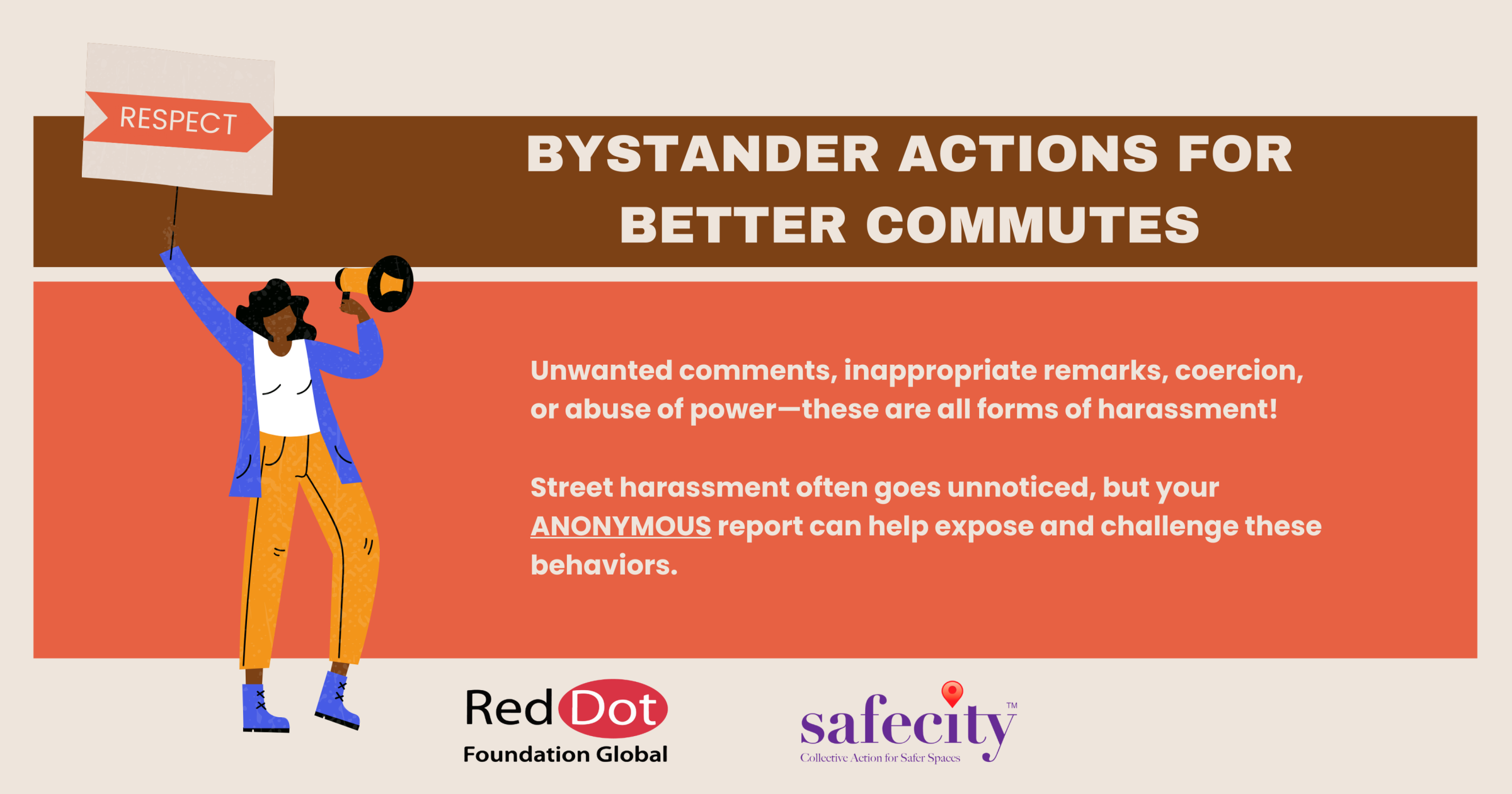
Bystander intervention is a proven way of reducing incidents of harassment in places by intimidating the harasser and giving witnesses the ability to act and intervene. This helps create a culture of intolerance towards harassment and gender based violence. Through interventions, bystanders can empower and protect victims whilst holding harassers accountable for their actions. Women should not have to be scared to use public transport, and together we can help make our journeys safer.
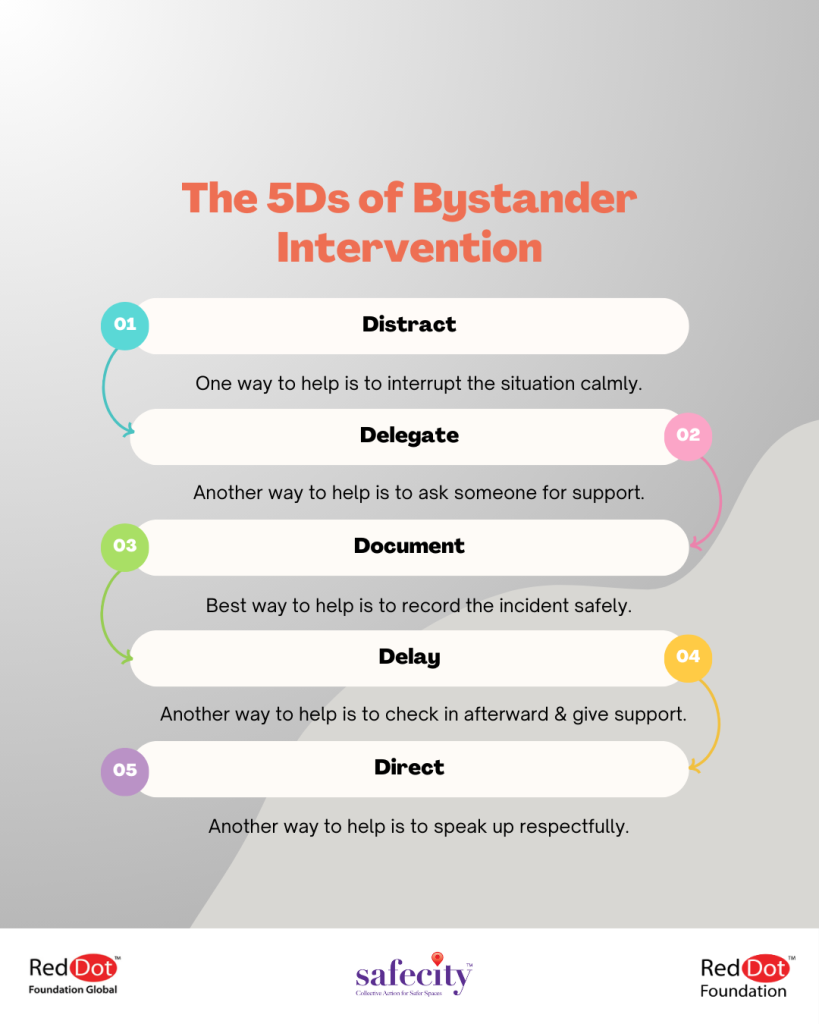
Transport for Greater Manchester is actively introducing targeted measures, such as an emergency contact system that allows public transport passengers to discreetly alert police if they feel unsafe or witness someone else in danger. The Safecity model believes that citizens can also be champions of change. Mancunions who take public transport can take an active role in making public transport safer for everyone through bystander intervention. It’s as simple as the 5 D’s (Direct, Distract, Delegate, Delay, and Document) developed by the Right to be organisation3.
These 5 D’s of bystander intervention can be used on public transport as a way for citizens to counteract harassment in public places. Direct is to speak up against the behaviour or support the person being targeted (e.g., asking if they’d like to switch seats). Distracting is to interrupt the situation without confrontation, such as asking the person for directions or starting a casual conversation. The delegate is to seek help from a driver, conductor, station staff, or other passenger. Delay is to check in with the person afterwards to see if they’re okay and offer support. And lastly, Document is to record the incident to share with authorities if needed. These small steps that people can take daily can be part of a big change.
So, next time you’re on public transport, look around and see what you can do to help make your journey a little bit safer. But remember, we have to be careful and safe first to help someone.
Ready to Make Greater Manchester Safer?
Real change happens when people come together. Whether you’re sharing your experience or urging others to speak up, your participation is critical to creating a safer, more inclusive community.
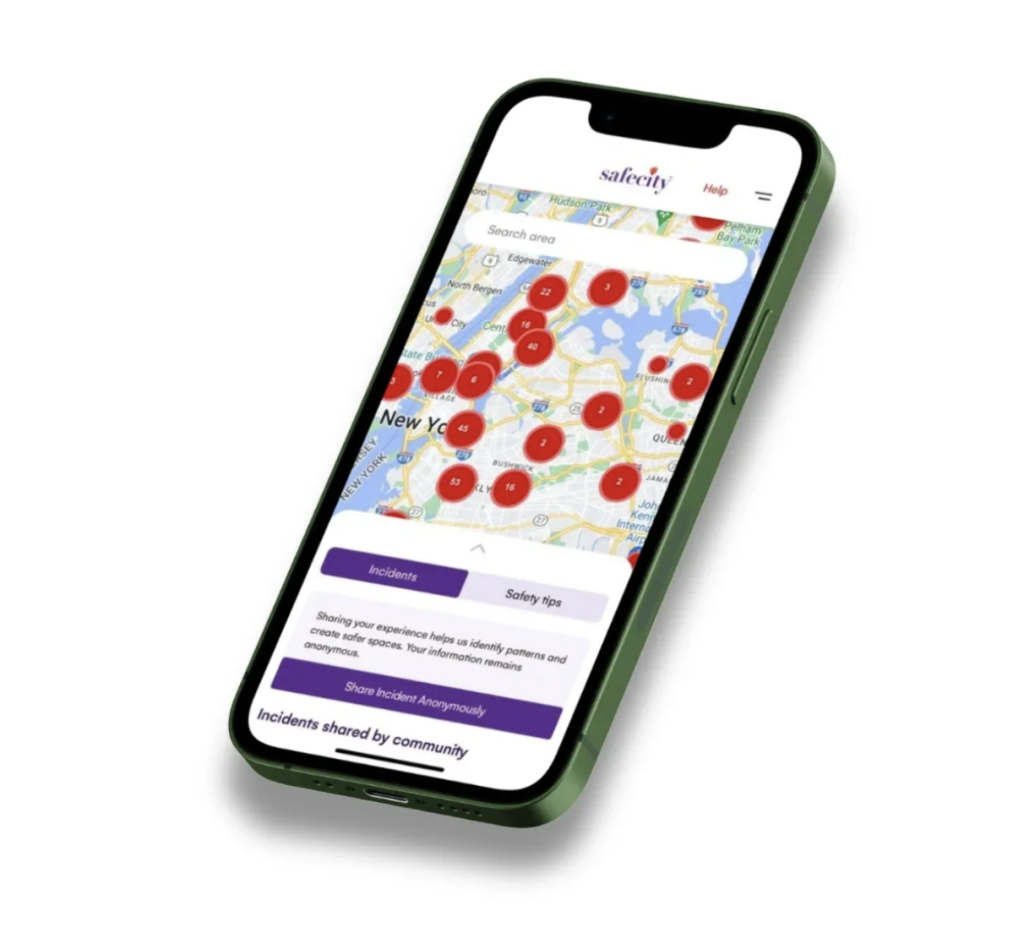
Download the SafecityApp to:
- Anonymously report incidents
- Connect with nearby support services
- Access safety tips and legal resources
- “Greater Manchester Metrolink: Public Transport Abuse ‘All Too Common,’ ” BBC News, May 15, 2019, https://www.bbc.co.uk/news/uk-england-manchester-48278874. ↩︎
- “Greater Manchester Metrolink: Public Transport Abuse ‘All Too Common,’ ” BBC News, May 15, 2019, https://www.bbc.co.uk/news/uk-england-manchester-48278874.
↩︎ - Right To Be, “The 5Ds of Bystander Intervention,” Right To Be, 2022, https://righttobe.org/guides/bystander-intervention-training/.
↩︎
Leave a Reply